KRIBI BOOST: PAK Strengthens Engagement with Licensed Customs Brokers in Douala
KRIBI BOOST: PAK Strengthens Engagement with Licensed Customs Brokers in Douala
In Douala, the Port Authority of Kribi brought together customs brokers, freight forwarders and other logistics professionals to identify operational challenges, strengthen dialogue and improve the efficiency of cargo flows through Kribi.
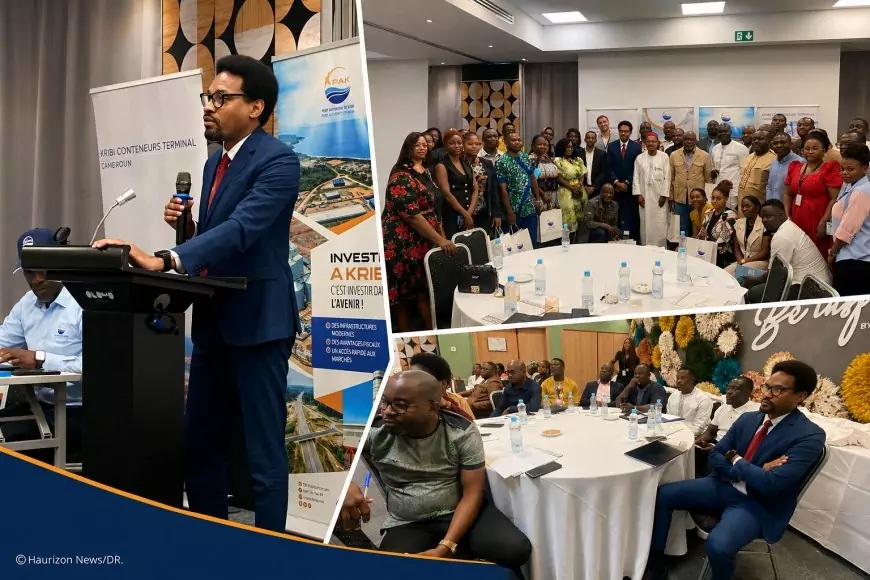
On 30 July 2026 in Douala, the Port Authority of Kribi (PAK) held a KRIBI BOOST session bringing together Licensed Customs Brokers (LCBs), freight forwarders and stevedoring professionals. The meeting provided an opportunity to address operational challenges directly, present PAK’s digital solutions and identify practical measures to enhance the attractiveness and competitiveness of the Port of Kribi.
The Port Authority of Kribi (PAK) is continuing to strengthen its engagement with stakeholders across the logistics chain. On 30 July 2026 in Douala, PAK organized a KRIBI BOOST session dedicated to Licensed Customs Brokers (LCBs), freight forwarders and stevedoring professionals, key partners in the smooth and efficient movement of cargo.
Organized as part of PAK’s proximity and stakeholder engagement strategy, the meeting aimed to better understand the operational challenges faced by professionals, discuss their commercial concerns and jointly identify solutions capable of supporting traffic growth through the Port of Kribi.
A platform for dialogue focused on operational realities
Habib Iya, Head of PAK’s Douala Representation and personal representative of the Director General at the event, explained the purpose of the initiative:
“Kribi Boost is a platform for reflection, discussion and dialogue, where we specifically and exclusively address the difficulties that these stakeholders may encounter.”
The discussions covered several issues related to the use of the port platform, operational bottlenecks and potential measures to improve the experience of cargo owners and their logistics partners.
The meeting also provided an opportunity to highlight the Port of Kribi’s advantages in terms of operational flexibility and tariff adaptability. For Habib Iya, the openness of the discussions was one of the key outcomes of the session:
“I think the discussions were quite frank and very interesting, and we can say that at the end of this session, we have a sort of roadmap addressing the friction points that may affect our collaboration.”
This approach reflects PAK’s determination to turn feedback from industry professionals into concrete actions and to make continuous improvement a central element of its relationship with stakeholders.
SIP and SmartPAK: Digital Solutions for Greater Port Efficiency
Digital transformation was another key focus of the meeting. Participants were introduced to two tools designed to improve operational visibility and efficiency: the Port Information System (SIP) and the SmartPAK application.
Habib Iya explained the complementary roles of the two platforms:
“The SIP is the brain of the operations of the Port of Kribi, while SmartPAK is a free application that allows anyone, using their smartphone, to track the progress of their container or cargo.”
The SIP serves as a central tool for managing port operations, while SmartPAK brings port information closer to users by enabling them to monitor the progress of their cargo more easily.
This digital transformation is part of a broader ambition supported by PAK’s management: to position Kribi as an economic, industrial and logistics hub capable of meeting the growing requirements of modern operators and supply chains.
For industry professionals, these developments respond to practical needs. André Mbeumo, a stevedoring professional and PAK board member, welcomed the potential benefits of these digital solutions:
“I believe that if it works as they envisage, it will be an extremely important facilitation for licensed customs brokers like us.”
He also highlighted their potential to reduce some of the delays still encountered in day-to-day operations:
“What they are putting in place is an extremely important facilitation. It will help eliminate some of the delays we still experience today.”
A Focus on Improving Port Services
The participation of logistics stakeholders provided an opportunity to compare industry expectations with solutions that can be developed by the various actors operating within the port ecosystem.
Laurent Goutard, Managing Director of Kribi Conteneurs Terminal (KCT), emphasized the importance of creating spaces for dialogue in order to properly identify challenges and develop appropriate responses:
“Creating spaces and opportunities for discussion and dialogue is really important in order to properly understand the issues and address the right topics.”
This approach is also aligned with KCT’s commitment to supporting the continued development of the Port of Kribi and contributing to the quality of services provided to operators:
“The outlook is indeed to support this initiative and make sure that we can provide an industrial service that meets the quality standards of the container industry.”
Regarding the issues raised during the meeting, Laurent Goutard stressed the importance of moving towards concrete solutions:
“We will work on these issues in order to resolve them and provide solutions, because they are well-founded, and we will work on them.”
Proximity as a Driver of Traffic Development
Held in Douala, the country’s major economic and logistics centre, the KRIBI BOOST session forms part of the Port Authority of Kribi’s commercial proximity strategy, particularly through its Douala Representation.
Beyond an institutional meeting, the initiative aims to build stronger and more regular relationships with customs and logistics professionals, better understand the obstacles that may limit the routing of cargo through Kribi, and work with stakeholders to develop appropriate operational responses.
The difficulties and bottlenecks identified by professionals were therefore presented directly to PAK teams, leading to detailed discussions on possible improvements.
The approach is based on a clear conviction: sustainable traffic growth requires listening to industry stakeholders, simplifying procedures, digitalizing services and developing solutions that respond effectively to the needs of cargo owners and their partners.
Kribi: An Economic, Industrial and Logistics Hub
Through KRIBI BOOST, the Port Authority of Kribi reaffirms its commitment to strengthening its position as a competitive port platform serving Cameroon’s domestic and regional trade.
The initiative brings together commercial engagement, digital transformation, continuous service improvement and dialogue with industry professionals.
By strengthening its relationship with Licensed Customs Brokers, freight forwarders and other logistics stakeholders, PAK aims to create the conditions for smoother cooperation and contribute to sustainable growth in cargo flows through Kribi.
KRIBI BOOST therefore reflects a clear commitment: to listen to industry stakeholders, identify operational bottlenecks and jointly develop the solutions that will enable Kribi to further strengthen its role as a leading economic, industrial and logistics hub in Central Africa.